Why January 23 Matters for Women’s Long-Term Healing
Every January 23, Maternal Health Awareness Day invites us to look beyond birth itself and ask a deeper question: How well are women actually supported after pregnancy? In the United States, maternal care often drops off sharply after delivery, even though the weeks and months that follow are one of the most vulnerable periods in a woman’s life. East Asian medicine has understood this for thousands of years, which is why this day aligns so naturally with the philosophy and care we offer at the Acupuncture Clinic of Boulder.
In Traditional Chinese Medicine (TCM), childbirth is viewed as one of the most powerful physiological events a woman will ever experience. Labor and delivery draw deeply on the body’s reserves of Blood, Qi, and Jing, the substances that govern vitality, hormones, emotional stability, and long-term health. While Western medicine may see birth as something that “ends” once the baby arrives, classical medicine sees it as a profound opening — a time when the body must be carefully restored, protected, and nourished so it can return to balance.
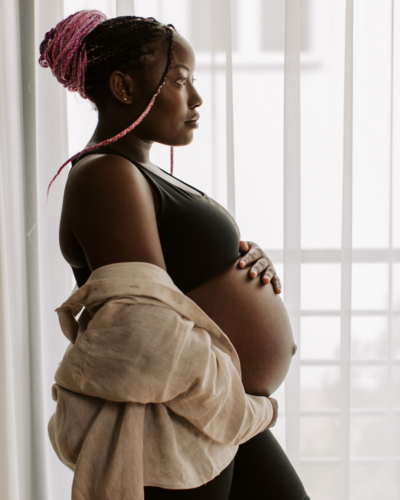
Historically, women were given a full postpartum recovery period, “the fourth trimester“, often lasting forty days or more, devoted to rest, warming foods, emotional support, and gentle care. Today, many new mothers are expected to resume normal life almost immediately, often while sleep deprived, hormonally depleted, and emotionally overwhelmed. This disconnect between what the body needs and what modern life demands helps explain why so many women later develop fatigue, anxiety, mood changes, menstrual irregularities, weight gain, and early perimenopausal symptoms that trace back to an incompletely healed postpartum period.
One of the first systems affected after childbirth is the nervous system. Pregnancy and birth place enormous strain on the heart, blood vessels, and stress response pathways. From a TCM perspective, this can disturb the Heart and Liver, leading to insomnia, anxiety, palpitations, and emotional fragility. Acupuncture helps regulate the autonomic nervous system, gently shifting the body out of fight-or-flight and into a state where repair and hormonal recalibration can occur. Modern research confirms this, showing that acupuncture influences vagal tone, cortisol levels, and inflammatory markers — all of which are central to postpartum recovery and long-term heart health.
Bleeding and tissue healing are also central concerns in the weeks following birth. In Chinese medicine, healthy postpartum bleeding is expected, but excessive bleeding, retained tissue, or prolonged spotting are signs that Blood and Qi are not moving or rebuilding properly. Acupuncture increases circulation to the uterus and pelvis, supports clotting when needed, and helps the body reabsorb residual inflammation. This is why many women notice not only better physical recovery but also improved energy and clarity when postpartum care is properly supported.
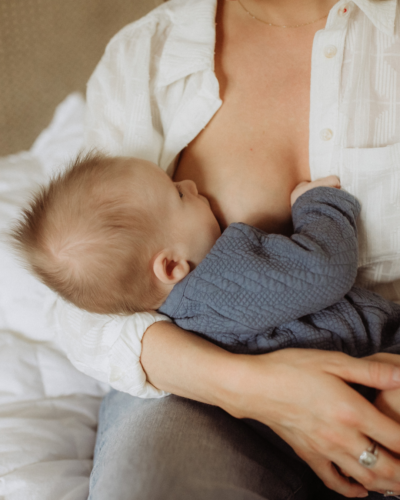
Breastfeeding and milk supply offer another window into maternal health. In TCM, breast milk is formed from Blood and Fluids; when these are deficient or stagnant, lactation can suffer. Acupuncture improves circulation to the chest, supports hormonal signaling, and calms the stress response that often interferes with let-down. This can be especially meaningful for women who are already anxious or exhausted from long fertility journeys, traumatic births, or high-pressure expectations around feeding.
Sleep, mood, and emotional stability are deeply interconnected in the postpartum period. From a Chinese medical perspective, postpartum insomnia, anxiety, and depression are signs that the Shen (spirit) has lost its anchor because Blood and Kidney energy are depleted. Acupuncture helps restore this internal grounding, allowing the mind to quiet, sleep to deepen, and emotions to stabilize. Many women who come to us years after giving birth describe feeling “never quite the same,” and yet find that acupuncture brings a sense of calm and coherence back to their nervous system that they thought was gone for good.

The physical body also carries the imprint of pregnancy and birth. Cesarean sections, tearing, abdominal strain, and pelvic trauma can disrupt the flow of Qi and Blood through the lower abdomen, leading to chronic pain, digestive issues, or a feeling of disconnection from the core. Acupuncture increases blood flow to these tissues, reduces scar adhesions, and supports the body’s natural healing response, often relieving symptoms that conventional care struggles to explain.
Hormonal balance, too, depends on proper postpartum recovery. In TCM, the Kidneys, Liver, and Spleen regulate the endocrine system. When these organs are depleted after childbirth, women may experience irregular cycles, early hot flashes, weight gain, low libido, or fatigue years later. This is why many perimenopausal women benefit enormously from addressing unresolved postpartum depletion, even if their last pregnancy was decades ago.
Here in Boulder, we see this pattern every day. Our community is filled with new mothers, IVF patients, high-achieving women, and perimenopausal patients who sense that something shifted in their bodies after pregnancy and never fully returned to balance. Maternal Health Awareness Day reminds us that these experiences are not imagined — they are rooted in real physiology, real nervous system changes, and real hormonal depletion.

This is also why January is such a powerful time to focus on maternal health. As we collectively turn toward new beginnings, nervous system reset, heart health, healthy weight, and emotional resilience, we are addressing the very systems most affected by pregnancy and postpartum recovery. Supporting maternal health supports everything else.
At the Acupuncture Clinic of Boulder, we believe healing does not stop when the baby is born. Whether you are newly postpartum, years beyond childbirth, recovering from fertility treatments, or navigating perimenopause, your body still carries the wisdom — and sometimes the wounds — of your reproductive journey. Acupuncture and East Asian medicine offer a way to listen, restore, and begin again.
References
American College of Obstetricians and Gynecologists (ACOG). Postpartum Care and Maternal Health Outcomes.
Centers for Disease Control and Prevention (CDC). Pregnancy-Related Deaths and Postpartum Risk.
NIH National Center for Complementary and Integrative Health. Acupuncture: In Depth.
Langevin HM et al. “Connective Tissue and Acupuncture.” The Anatomical Record.
Napadow V et al. “Acupuncture Modulation of the Autonomic Nervous System.” Journal of Alternative and Complementary Medicine.
Maciocia G. The Practice of Chinese Medicine.
Chen J & Chen T. Chinese Medical Herbology and Gynecology.