Discover the connection between autumn, grief, the Lung meridian, and emotional balance in Traditional Chinese Medicine, along with simple practices to support your well-being.
Autumn arrives with quiet beauty and a subtle invitation: to let go.
As the leaves change color and the air becomes crisp, nature reminds us that releasing what is no longer needed is an essential part of renewal.
In Traditional Chinese Medicine (TCM), autumn is associated with the Lungs, the Large Intestine, and the emotion of grief. This seasonal connection offers a meaningful perspective on emotional well-being, physical health, and the importance of creating space for change.
At the Acupuncture Clinic of Boulder, we embrace the wisdom of seasonal living and encourage patients to care for their bodies and minds as the seasons shift.
Traditional Chinese Medicine views the body as interconnected with the natural world. Each season is associated with particular organs, emotions, and energetic qualities.
Autumn corresponds to the Metal element, which is associated with structure, clarity, boundaries, and the ability to release.
In TCM, the Lungs and Large Intestine are the primary organ systems associated with the Metal element.
The Lung Meridian: Breathing, Grief, and Emotional Balance
In Traditional Chinese Medicine, the Lungs represent more than the physical act of breathing.
The Lung system is traditionally associated with our ability to take in what nourishes us, including breath and inspiration, while releasing what is no longer needed.
The Lungs are also connected with the emotion of grief.
Grief is a natural response to loss, love, connection, and change. It may arise after losing a loved one, experiencing a major life transition, or letting go of something deeply meaningful.
Like the autumn wind, grief can arrive gently or feel overwhelming.
In TCM philosophy, acknowledging grief and allowing emotions to move naturally is considered an important part of maintaining balance.
When grief feels unresolved, individuals may experience emotional heaviness, fatigue, tension, or changes in breathing. These symptoms can have many causes and should not automatically be attributed to an imbalance in the Lung meridian.
The Large Intestine Meridian: The Importance of Letting Go
The Large Intestine is the partner organ of the Lungs in Traditional Chinese Medicine.
Physically, the large intestine eliminates waste from the body. Symbolically, it represents the ability to release what is no longer useful.
Together, the Lung and Large Intestine systems reflect an important lesson of autumn:
We must make space for the new by releasing what we no longer need.
This may involve letting go of old habits, unrealistic expectations, emotional burdens, or patterns that no longer support our well-being.
Grief and the Healing Practice of Letting Go
Autumn teaches us that letting go is not necessarily an ending. Often, it is a transition.
Just as trees shed their leaves in preparation for winter, we can use this season as an opportunity to reflect, simplify, and make room for renewal.
Grief does not follow a predictable timeline, and healing does not require forgetting or moving on before we are ready.
Instead, the practice of letting go can mean allowing emotions to exist without judgment, recognizing what has changed, and gently making space for what comes next.
Mindfulness, supportive relationships, time outdoors, and restorative self-care practices can help create moments of comfort during periods of emotional transition.
4 Ways to Support Lung Health and Emotional Wellness in Autumn
Traditional Chinese Medicine offers several seasonal practices intended to support balance and well-being as the weather becomes cooler and drier.
1. Acupuncture for Seasonal Wellness and Emotional Support
Acupuncture is an important component of Traditional Chinese Medicine and is often used as part of a holistic wellness routine.
In TCM, acupuncture treatments may focus on the Lung and Large Intestine meridians during autumn, depending on the patient’s individual needs.
For individuals experiencing grief, stress, or emotional tension, acupuncture can provide a quiet, restorative environment that encourages relaxation and mindfulness.
Some patients report feeling calmer and more grounded after acupuncture treatments.
Although research has explored acupuncture for stress and emotional well-being, evidence specifically supporting acupuncture as a treatment for grief remains limited.
At the Acupuncture Clinic of Boulder, treatments are individualized to address each patient’s health concerns and wellness goals.
2. Nourish the Lungs With Seasonal Foods
Autumn is traditionally associated with dryness in Chinese medicine.
As temperatures cool and indoor heating becomes more common, some people notice dry skin, throat irritation, or increased respiratory discomfort.
TCM dietary traditions often recommend warm, nourishing foods during autumn.
Some seasonal favorites include:

- Steamed pears with honey: A traditional Chinese dietary preparation often enjoyed for soothing the throat.
- Warm ginger tea: A comforting beverage commonly used in TCM to support digestion and warmth.
- Broths and soups: Nourishing meals made with daikon radish, mushrooms, and seasonal root vegetables.
- Sesame seeds and almonds: Foods that provide beneficial fats and nutrients.
- Cooked vegetables: Warm, easy-to-prepare meals that can be incorporated into a balanced seasonal diet.
Staying hydrated is also important, particularly as the air becomes cooler and drier.
These foods can be part of a healthy diet, although traditional TCM descriptions of their effects should not be confused with scientifically established treatments for respiratory conditions.
3. Practice Mindfulness and Autumn Rituals
Autumn provides a beautiful opportunity to slow down and reconnect with the natural world.
Simple mindfulness practices can encourage reflection and emotional awareness.
Walking meditation
Take a peaceful walk among the changing leaves. Notice the colors, sounds, and sensations of autumn.
As you walk, consider what feels ready to be released from your life.
Journaling
Set aside a few minutes to reflect on the following questions:
- What am I holding on to?
- What no longer supports my well-being?
- What would I like to make room for?
- How can I be more compassionate toward myself during times of change?
Creating space
Consider simplifying an area of your home, clearing unnecessary clutter, or adjusting commitments that have become overwhelming.
Small acts of letting go can create a sense of clarity and calm.
4. Use Gentle Breathing Exercises to Encourage Relaxation
Breathing practices are a natural complement to autumn’s association with the Lungs.
Slow, comfortable breathing can help direct attention to the present moment and encourage relaxation.
Try this simple exercise:
- Find a comfortable seated position.
- Relax your shoulders and allow your breathing to settle.
- Inhale gently through your nose.
- Exhale slowly and comfortably, without forcing the breath.
- Continue for several minutes, noticing how your body feels.
Avoid forcing deep breaths or holding your breath if doing so causes discomfort or dizziness.
This practice can be especially helpful as a quiet moment of self-care during a busy day.
A Guided Autumn Meditation for Grief and Letting Go
This gentle meditation draws inspiration from the natural rhythm of autumn.
Find a quiet space where you can sit or lie down comfortably.
Close your eyes if that feels comfortable, and begin by noticing your breath.
Take a gentle breath in, allowing your chest and abdomen to expand naturally.
Exhale softly, imagining tension gradually releasing from your body.
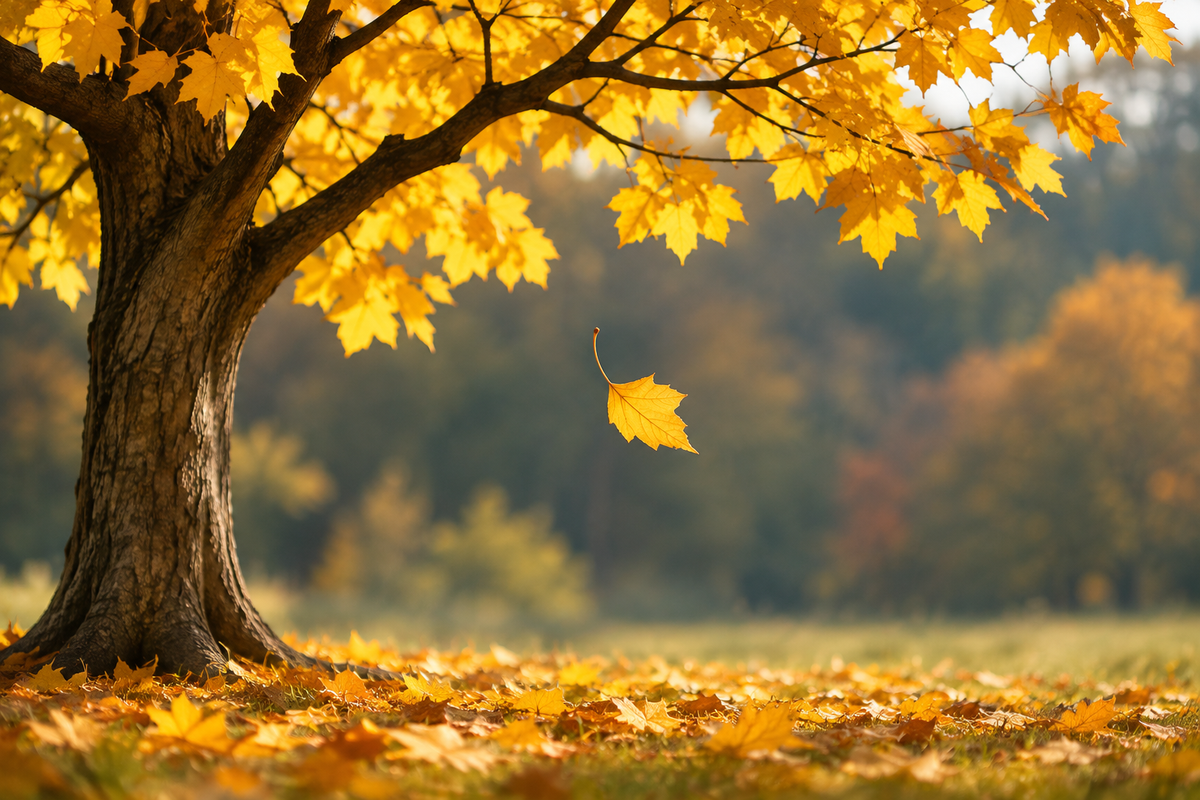
Now visualize yourself standing beneath a beautiful tree in autumn.
Its branches are filled with golden leaves, gently moving in the breeze.
With each exhalation, imagine a leaf drifting toward the ground.
Each leaf may represent a worry, an old expectation, or something you feel ready to release.
There is no need to force anything away.
Simply allow the leaves to fall when they are ready.
As you breathe in, imagine welcoming fresh air, new possibilities, and a sense of spaciousness.
As you breathe out, allow yourself to soften.
Continue for several minutes, remembering that letting go is a process, not a demand.
When you are ready, gently open your eyes and carry this sense of calm into your day.
Acupuncture and Grief: Finding Support Through Seasonal Change
Grief is not something that needs to be fixed. It is a natural part of being human.
Whether you’re experiencing the loss of a loved one, navigating a life transition, or simply feeling the emotional weight of seasonal change, finding compassionate support can make a meaningful difference.
Acupuncture may be incorporated into a broader self-care plan to support relaxation and general well-being.
It is not a substitute for grief counseling, mental health treatment, or medical care when those services are needed.
Traditional Chinese Medicine encourages us to recognize the changing seasons and respond with practices that nourish both body and mind.
Autumn reminds us that rest, reflection, and release can be valuable parts of the healing process.
Embrace Autumn Wellness at the Acupuncture Clinic of Boulder
At the Acupuncture Clinic of Boulder, we believe that caring for emotional and physical health is an important part of living well through every season.
Our licensed acupuncturists provide individualized treatments informed by Traditional Chinese Medicine, taking into consideration each patient’s unique needs and wellness goals.
Whether you’re seeking support for stress, relaxation, seasonal transitions, or general well-being, acupuncture may be a meaningful addition to your self-care routine.
As the leaves fall and the seasons change, consider giving yourself time to rest, reflect, and reconnect.
Contact our clinic to learn more about acupuncture and Traditional Chinese Medicine in Boulder, Colorado.
Acupuncture Clinic of Boulder
2500 Arapahoe Avenue, Suite 290
Boulder, CO 80302
Phone: 303-665-5515
Website: www.acuboulder.comAutumn arrives with quiet beauty and a subtle invitation: to let go. In TCM, each season has an emotional tone, and autumn’s is grief. Grief arises naturally from love, connection, and attachment. It can sweep through us like wind; sometimes gentle, other times overwhelming. When acknowledged, grief becomes a medicine of its own, clearing heaviness from the chest and restoring ease to the breath. But when resisted or held too tightly, it can weigh down the body, often showing up as fatigue, sadness, or shallow breathing.
The Lungs, associated with autumn, govern our ability to take in the new (breath, inspiration) and release the old (exhalation, attachments). Their partner organ, the Large Intestine, carries the same lesson: what we no longer need must be released to create space for renewal.
The Medicine of Letting Go
Autumn teaches us that letting go is not an ending but a passage. Just as trees shed their leaves to prepare for winter’s rest, we too are invited to release what no longer serves us: old habits, unresolved emotions, or even clutter in our homes. This release creates fertile ground for new growth in the seasons ahead.
Practical Ways to Support Yourself in Autumn
1. Acupuncture
Acupuncture harmonizes the Lung and Large Intestine channels, helping to open the breath, ease chest tightness, and calm emotional heaviness. Regular treatments in this season can also strengthen immunity, preparing the body for colder months.
2. Nourishment for the Lungs
The dryness of autumn can irritate the Lungs. Moistening foods and herbs help restore balance:
- Steamed pears with honey (a soothing Lung tonic)
- Warm ginger tea to support digestion and circulation
- Broths and soups with daikon, mushrooms, and root vegetables
- Sesame seeds, almonds, and honey for gentle nourishment
3. Mindfulness & Ritual
- Walking Meditation: Take time outdoors among falling leaves. Notice what feels ready to be released within you.
- Journaling: Write about what you’re holding on to and what you might be ready to let go of.
- Breath Practices: Gentle breathing exercises, especially long, slow exhalations, help the body mirror the season’s rhythm.
A Guided Meditation for Autumn
Find a comfortable seat or lie down. Close your eyes. Take a slow, deep breath in, filling the chest fully. Exhale softly, as if releasing tension into the air.
Visualize yourself standing beneath a tree in autumn. Its branches are filled with golden leaves. With each breath out, imagine a leaf drifting gently away, carrying with it something you are ready to release—a worry, an old story, a heaviness. Watch it fall and return to the earth.
Breathe in deeply, welcoming fresh air and new possibility. Breathe out, letting go with ease and trust. Continue for several minutes, until you feel lighter, more spacious, and at peace.
When you are ready, open your eyes, carrying this sense of release into your day.
Closing Reflection
Autumn invites us to honor our grief, not as something to “fix,” but as part of life’s natural rhythm. When we breathe deeply, nourish our bodies, and allow space for letting go, we prepare ourselves for the stillness of winter and the promise of renewal in spring.
If you’re feeling the weight of the season or navigating grief and transition, know you don’t have to go through it alone. Acupuncture and herbal support can help restore balance, strengthen immunity, and bring ease to both body and spirit.
Call us or email anytime to schedule a session—we’re here to support you in moving through this season with more comfort, resilience, and peace.