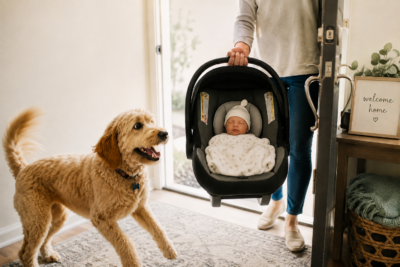
Tips for creating a safe, positive transition for your dog and your new baby.
Bringing a new baby into your home when you have a dog can feel overwhelming. How will your dog react? You certainly don’t need anything else on your plate to worry about right now. Here are some things to consider to minimize stress and avoid potential issues. These same things apply to bringing home a new dog when you have a baby, young child, or even a dog already in the home.
Training is Crucial
Congratulations! Something is changing. Either a new baby or a new dog is coming home. Maybe both at the same time if you love chaos! Prepare ahead of time. If you already have a dog you’ll want to start a training process well ahead of time. This training isn’t so much about teaching commands like sit, down, come, etc. but is geared towards developing impulse control, calmness, and resilience.
Dogs have a prefrontal area just as we do. Developing this area allows our canine companions to regulate emotions, energy, and behaviors. Your dog has instincts, drives, and behavior patterns that don’t always align with the needs of the human. The core function of training is to build this prefrontal area, allowing your dog to follow your cues and commands instead of their instincts at any given moment. It also brings calmness and resilience. Just like meditation for a human. In fact, one of our training exercises is dog meditation. Really.
“The canine prefrontal area is a region in the front of the brain’s frontal lobe that manages impulse control, decision-making, and working memory; while smaller and less folded than the human version—accounting for about 10% of the dog’s brain—it helps dogs handle training, focus, and emotional regulation.” (FirstVet, 2022) https://firstvet.com/us/articles/10-interesting-facts-about-your-dogs-brain
Teaching a dog commands is easy. Creating this prefrontal “switch” is more like therapy, change over time. Nothing crazy, but a few weeks to a few months depending on the dog. Following commands, especially in the face of distractions, requires this regulatory part of the brain to be well-developed.
Not the best high chair cleaner, but willing to work!
The good news is that you don’t need to use any type of heavy-handed or “old school” training techniques. But we also can’t use food-based training. Food will bring excitement and overstimulation, which is exactly what we want to avoid in developing the prefrontal area. We can’t get into all of the training details here, but please reach out and we’d be happy to schedule a consultation to go more in-depth regarding the process and assess your particular situation.
Setting Up the Household for Success
While training is the big-ticket item, there are many well-accepted Do’s and Don’ts:
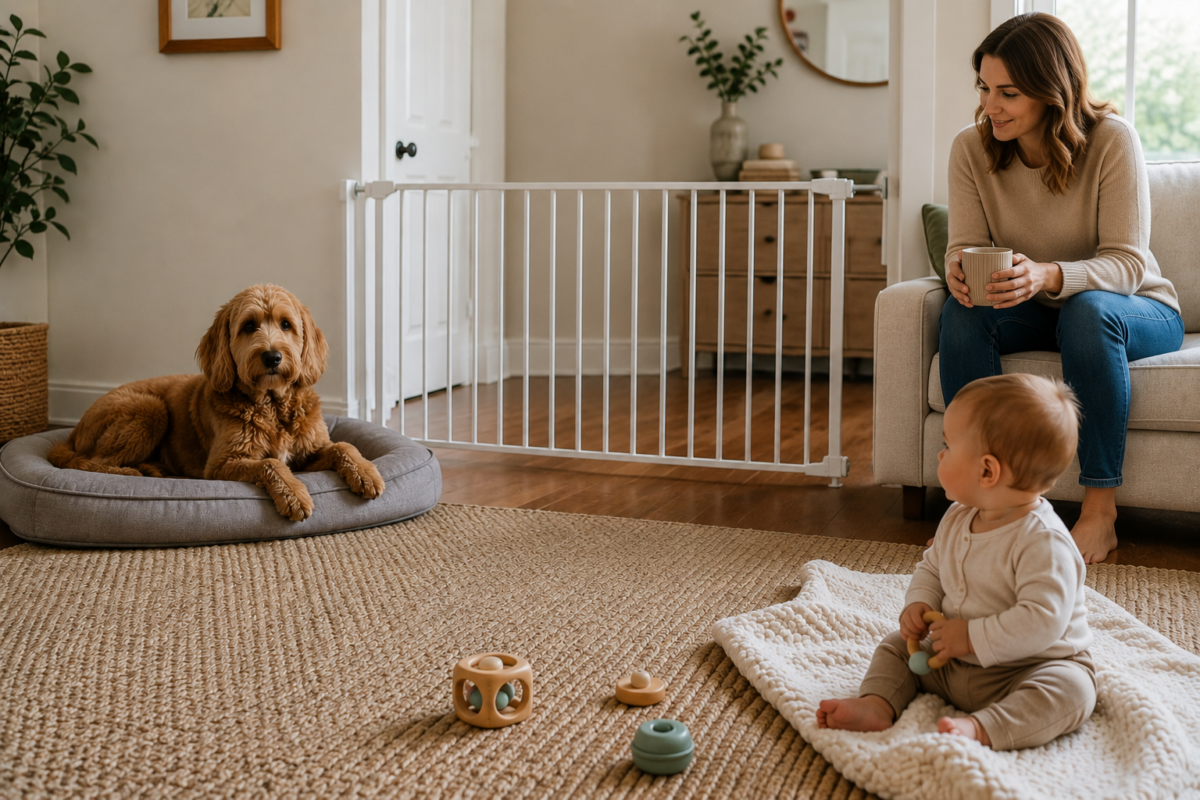
- DO set up your environment to be able to keep your dog completely separate from the baby. Tall and strong baby gates. A separate room or area of the house for the dog. Use a crate when needed, for example, when you need to move around the house with the baby.
- DO introduce the scent first. Allow your dog to sniff a blanket or clothing that your baby has used.
- DO always have a partner when the dog and baby are in the same space. This way someone can always be responsible for, and aware of, the dog. It’s important to keep an eye on them. If the dog is uncomfortable there will be signs.
- DO keep as much of the dog’s daily routine as possible. Dogs are sensitive to changes. Make the new baby the only major change if you can.
- DO allow your dog to see you interacting with the baby. The dog should not feel isolated. This could be from a crate or on leash far away in the same room, or through a gate in another room. Always have guardrails.
- DON’T ever leave the baby and dog alone together.
- DON’T correct or punish the dog for behaviors around the baby. This can create an unwanted association between being around baby and unpleasant things happening.
- DON’T allow the dog to lick your baby’s face once you get to the point where they can interact. Both for health and safety reasons.
- MOST IMPORTANTLY, DON’T rush the process. Give your dog some time to settle. I’ve been training dogs since 1992 and can’t count the number of baby/child interactions I’ve done, including my two boys not so long ago. It’s better to let the dust settle over days and weeks than to go too fast too soon. You want the novelty to have worn off for your dog before slowly increasing time and proximity to your baby.
I hope this gives you some food for thought and also some practical tips for preparing to bring your new baby in the home. We’re always happy to help!
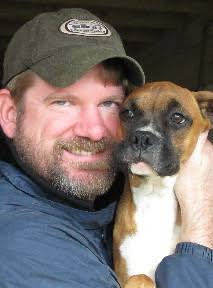
Michael Perry is a professional dog trainer in Boulder, Colorado and owner of Front Range Dog Training. Along with training dogs since 1992 he is also a Psychotherapist, bridging the gap between humans and dogs. You can reach Front Range Training at:
www.frontrangedogtraining.com
info@frontrangedogtraining.com
303-513-5388