Practical training and routines to help your dog adjust before your family grows.
Dogs and kids go together like peanut butter and jelly. Research has shown that children who grow up with dogs are less likely to develop allergies as adults, and anyone who grew up with a good dog knows how special that bond can be.
But here’s a hard truth: One of the most common reasons dogs are surrendered to shelters is conflict with a new baby, or simply a lack of time for the dog once a baby arrives. As a trainer, that always saddens me because a little preparation can go a long way toward setting everyone up for success. The good news is that you don’t have to leave this to chance. Here’s how to prepare.
Start Early If You Can
If you’re still in the planning stages for both puppies and kids, you’re way ahead of the game.
Pick a family-friendly breed, and make sure your 8 to 16 week old puppy meets a range of kids, from babies to teenagers, keeping every interaction positive. This is your dog’s primary window for learning to love the lifestyle they’ll ultimately lead. Miss it, and it can be much harder to shift their perspective later.
If you’ve already got a social, easygoing dog who was raised around young children as a puppy, that’s great news! What a dog is positively socialized to in the first four months of life has a huge impact on what they’ll be comfortable with for the rest of their lives. Even these dogs can use some help with such a major family transition, but you’re well on your way.
What If Your Dog Missed That Socialization Window?
If your beloved adult dog wasn’t socialized around children as a puppy and is nervous or reactive around them now, you’re not alone. Most people aren’t thinking about future kids when they bring home their first dog, and plenty find themselves with a dog who simply wasn’t prepared for this chapter.
Bringing a baby home to a nervous or under-socialized dog takes a bit more planning, but the good news is that the same strategies below will help any dog make this transition more smoothly. Start today. The more routines and strategies you put in place now, the more flexibility and peace of mind you’ll have later, when you’re tired, smitten with your new baby, and in the fog of new parenthood.
While you’re preparing the nursery, prepare Fido too.
Create Safe Separation Between Your Dog and Baby
Even a well-socialized dog should never be left alone with a baby. Crying can trigger predatory behaviors in dogs, and accidents can happen in seconds. Babies and toddlers are known for grabbing, poking, and falling on unsuspecting dogs, which means you’ll need some reliable ways to create separation. Most often, you and the baby will be attached at the hip, and three can be a crowd, so help your dog learn to love their own space.
- Daily naps in a crate, pen, or behind a baby gate. Confining your dog at times lets you leave a sleeping baby on the floor or in a car seat while you run to the bathroom or take a shower. It also lets your dog be near you without you having to manage them at a time when you’ll already have plenty to manage. If your dog doesn’t already spend time happily in a crate or pen, get help with that now. A crate isn’t just for your sanity. It gives your dog a defined, safe space to retreat to if life gets overwhelming, as well as a safe place to eat in peace.
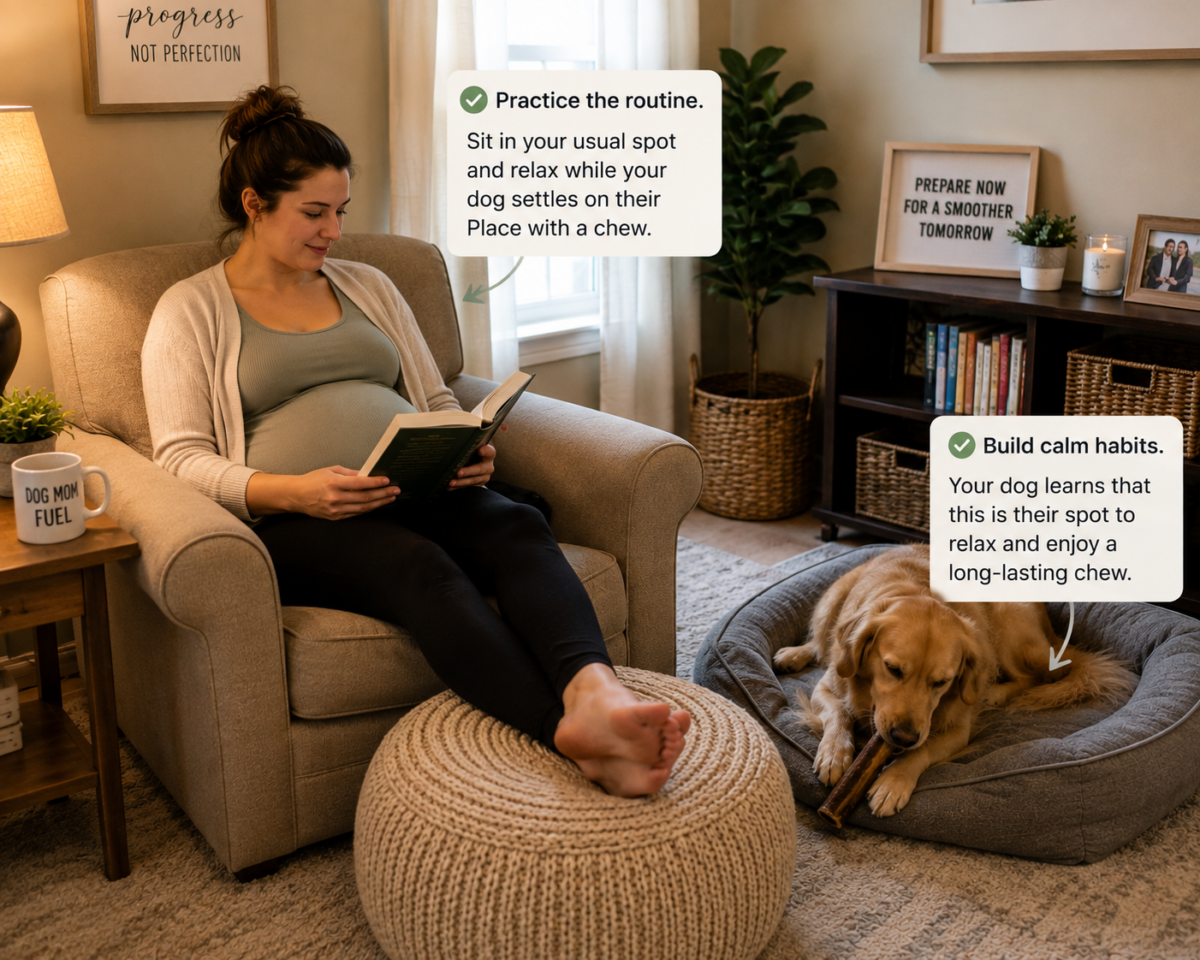
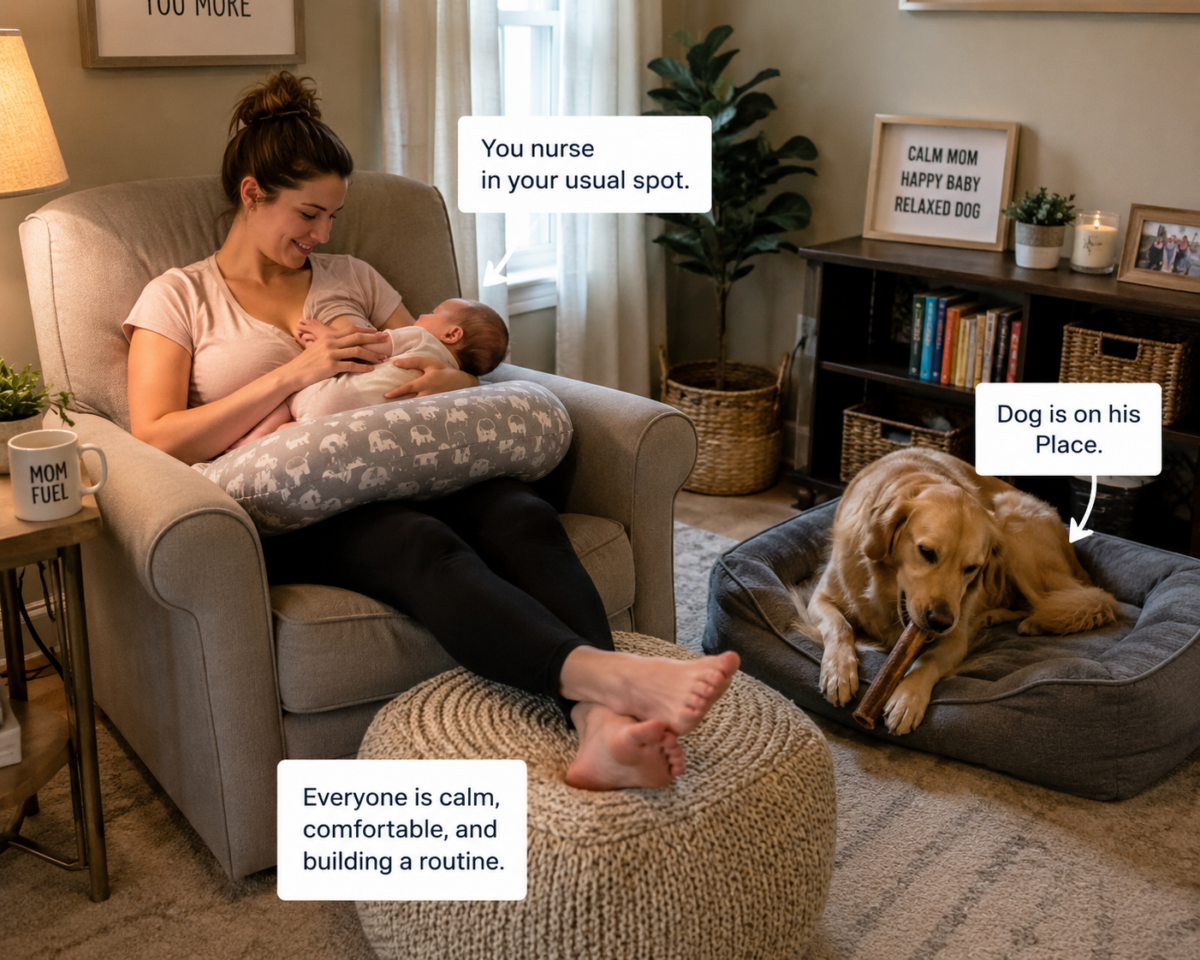
- Teach the “Place” command. When you’re feeding your baby, the last thing you’ll want is a jealous pup trying to climb into your lap. Teaching your dog to settle on a specific place (a bed or blanket) is really handy. In the beginning, tether your pup to an immovable object where they can lie on their bed and enjoy a good chew. A leash tied to the foot of a heavy sofa, a bedpost, or looped around the back handle of an inward-swinging door (like a bathroom or closet door) all work well. Make sure it’s truly sturdy and safe, and make it a wonderful place for your dog to chill when asked.
- Reclaim your personal space now. If your dog considers the couch (or your lap) their territory, you’ve got a recipe for jealousy. Teach a reliable “off” cue, and give your dog much less time on the furniture and in your lap well before the baby arrives. Give your dog their own comfortable bed nearby, and make time for snuggling with them on the floor or in a baby-free zone.
Reduce Barking Before Baby Arrive
A dog who barks every time a neighbor walks by or a squirrel sneezes might be mildly annoying now, but it becomes a real problem when that barking wakes the baby you just spent an hour soothing to sleep.
A few management strategies go a long way:
- Management is key. Apply an opaque film to the lower part of windows, or keep your dog away from the windows where most of the outside action happens.
- Interrupt calmly. Have your dog drag a leash in the house when you’re home with them. As soon as they bark, say “quiet,” calmly go get them, and remove them from the area. No yelling, just clear, calm action that says that’s not acceptable.
- Teach a bell instead of a bark. A dog who rings a bell to be let outside doesn’t need to bark for it.
- Nip demand barking in the bud. Don’t respond when your dog barks for play or dinner. Instead, teach them that sitting quietly is what gets them what they want and that barking at you never works. Fair warning: If barking at you has reliably worked in the past, it will take some time to teach your dog that you no longer respond to pushy, demanding behavior.
Plan for Exercise and Enrichment
When the baby comes home, most dogs experience a loss of closeness with you, affection, and their usual exercise routine. It will all come back, but your dog has no way of knowing that yet. You can’t help that most of your time and attention will belong to your baby for a while, but you can plan ahead to make sure your dog’s basic needs are still met.
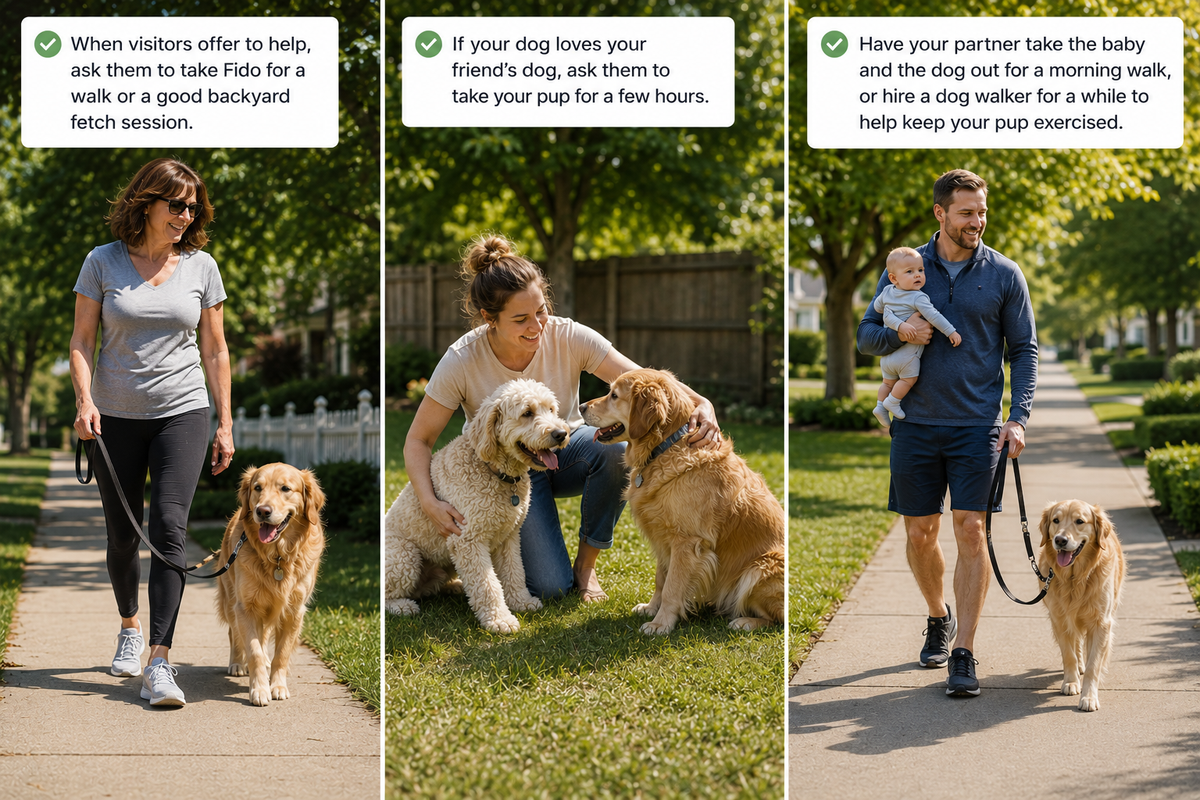
- When visitors offer to help, ask them to take Fido for a walk or a good backyard fetch session.
- If your dog loves your friend’s dog, ask them to take your pup for a few hours.
- Have your partner take the baby and the dog out for a morning walk, or hire a dog walker for a while to help keep your pup exercised.
- If your dog struggles on the leash, now is the time to work on that. Changing up how you walk your dog and the tools you use can help. As a mom, I can promise you won’t be okay with your dog lunging or pulling you around while you’re carrying a baby. As a trainer, I can promise that, with the right help, it can get better.
- Keep some low-effort enrichment on hand. I like to stuff a large portion of the day’s food into Kongs or Toppls, mix in a little canned food or water, and freeze them. You can also make lick mats with plain yogurt, pumpkin, or canned food. Keep 4 to 5 in rotation in the freezer so you always have one ready for a long, calming lick or chew session. It can be a lifesaver.
- If walks are in short supply and you don’t have a yard where your pup can run, borrow a friend’s yard or rent a Sniffspot. You and the baby can enjoy some time in nature while your dog gets out their zoomies.
Practice New Routines Before Baby Arrives
Dogs are creatures of habit, and everything is about to change, so start your new routines now.
- Practice the nursing routine. Sit wherever you think you’ll nurse most often, with your dog tethered (or on a Place command) nearby and chewing on something long lasting (a marrow bone, bully stick, or stuffed Kong). Do this for 5 to 10 minutes a day for a few weeks while you put your feet up, read, or watch a show. By the time the baby arrives, your dog will already know that this spot means it’s time to settle down and chew.
- Start using your physical barriers early and make them enjoyable. Exercise pens, tethers, gates, and crates create calm, conflict-free zones for everyone. The more anxious or reactive your dog is, the more this kind of structure will matter for everyone’s peace of mind. Pair confinement time with meals, chews, or lick mats, and your dog will learn to love these spaces. Make it part of the daily routine.
- Practice stroller walks before the baby comes home. Walk your dog on the side closest to the grass (and the good smells), rewarding good behavior with lots of small treats so walking politely beside a stroller becomes second nature before there’s a tiny life riding in it. Be clear about when it’s sniff time and when it’s time to walk calmly beside you.
Introducing Your Dog to Your New Baby
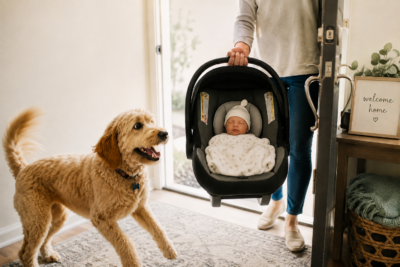
Dogs understand their world through scent, and your dog is going to be curious about this new little creature. Let your dog thoroughly investigate the car seat, the diaper bag, and other new items. There’s no need to rush the introduction. It’s better to go slowly if you’re unsure.
Eventually, your dog will want (and need) to sniff the newcomer. Pick a time when your pup is calm and relaxed. It’s best to do this with the baby swaddled in your arms. Have another trusted adult there to slow the dog down if needed, but let your dog come to you to sniff the swaddled feet or bottom. Keep faces separate, and keep tiny grasping hands away from sensitive areas.
Infants are relatively easy on dogs for the first few months since they mostly just eat and sleep. Once your baby starts reaching, grabbing, pulling, and crawling, things get more challenging. Having these strategies in place will give you peace and safety at home as you navigate the toddler phase.
The Bottom Line
It’s completely normal to feel anxious about bringing a new baby home when you’re not sure how your first “fur baby” will respond. The good news is that, with preparation and thoughtful management, most dogs grow to truly love the newest member of their family. Dogs don’t have to love all children to love their own.
If you have a dog you’re worried about, reach out for help sooner rather than later. I recommend seeking referrals to qualified trainers who are also parents themselves and have been through this firsthand.
OWNER
Dog Gone Good Training
(720) 310-0409
hello@doggonetraining.com
doggonetraining.com
Boulder, CO Dog Training | Est. 2004