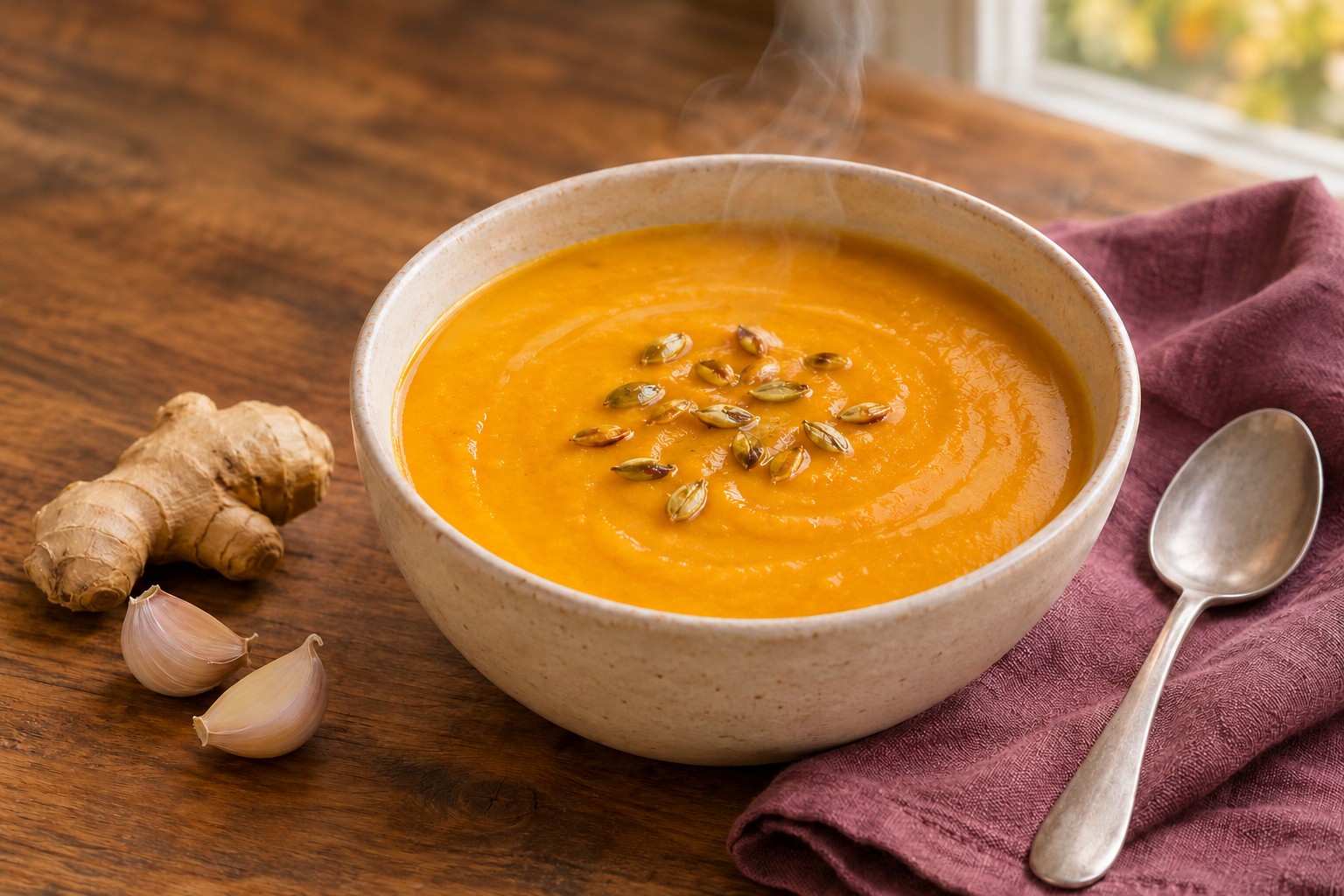
Cooler days call for something warm and comforting. This roasted butternut squash soup combines naturally sweet squash with fresh ginger, savory garlic, and a creamy texture without requiring dairy.
Below, you’ll find the recipe and a closer look at what each ingredient brings to the bowl.
Servings: Approximately 4
Prep time: 15 minutes
Cook time: 45 minutes
Dietary notes: Vegan and dairy-free; gluten-free when made with gluten-free broth.
Ingredients
- 1 medium butternut squash, about 2½ pounds, peeled, seeded, and cut into 1-inch cubes
- 2 tablespoons olive oil, divided
- 1 medium yellow onion, chopped
- 2 garlic cloves, minced
- 1 tablespoon freshly grated ginger
- 3 to 4 cups vegetable broth, preferably low sodium
- Salt and black pepper, to taste
- Optional: ½ cup unsweetened coconut milk
- Optional topping: toasted pumpkin seeds
Directions
- Roast the squash. Preheat your oven to 400°F. Toss the squash with 1 tablespoon olive oil and a little salt and pepper. Spread on a baking sheet and roast for 30 to 40 minutes, until tender and lightly browned.
- Cook the aromatics. In a large pot, warm the remaining tablespoon of olive oil over medium heat. Add the onion and cook for 5 to 7 minutes, until softened. Stir in the garlic and ginger and cook for about 1 minute.
- Simmer. Add the roasted squash and 3 cups of vegetable broth. Bring to a gentle simmer and cook for 10 minutes.
- Blend. Remove the pot from the heat. Carefully blend with an immersion blender until smooth. Add more broth to reach your preferred consistency.
- Finish and serve. Stir in the coconut milk, if using. Taste before adding more salt and pepper. Serve topped with toasted pumpkin seeds.
Why These Ingredients? A Traditional Chinese Medicine Perspective
In Traditional Chinese Medicine (TCM), foods are described by their flavor, warming or cooling qualities, and traditional relationship to the body’s functions. These descriptions belong to a traditional framework rather than established biomedical effects. The “Spleen” and “Stomach” refer to TCM functional systems associated with digestion and turning food into usable energy.
Winter squash is traditionally considered sweet and gently warming. In TCM food therapy, it is often chosen to nourish Spleen Qi, the digestive energy associated with transforming food into nourishment. Its soft, cooked texture makes it a familiar ingredient in comforting seasonal meals.
Butternut Squash: Supporting Spleen Qi
“Sweet” here describes a traditional flavor category, including naturally sweet vegetables, rather than a recommendation to eat added sugar.
Fresh Ginger: Warming the Middle
Fresh ginger, known as Sheng Jiang, is traditionally described as pungent and warming. It is used to warm the “middle,” a term referring to the digestive center, and to harmonize the Stomach. It is particularly associated with traditional approaches to nausea and digestive discomfort attributed to Cold.
In this soup, a small amount brings gentle spice that balances the squash’s sweetness.
Coconut Milk: Nourishing Yin
Some TCM food references describe coconut milk as sweet and neutral, with a traditional role in nourishing Yin, the body’s moistening and cooling aspect.
In this soup, a small amount adds a creamy finish that softens the ginger and pepper’s spice.
Onion: Encouraging the Movement of Qi
Onion is traditionally considered warming and pungent. In TCM food therapy, these qualities are associated with dispersing Cold and encouraging the movement of Qi, particularly when digestion feels sluggish or stagnant.
Gently cooking the onion mellows its sharpness and adds savory sweetness to the soup.
Black Pepper: Warming the Digestive Center
Black pepper is traditionally considered pungent and hot. It is used in TCM food therapy to warm the “middle,” or digestive center, and disperse Cold.
A small pinch adds another layer of warmth alongside the fresh ginger. Adjust it to your comfort, especially if spicy foods tend to aggravate heartburn.